
Understanding Ship Hulls
A comprehensive guide to ship hull design, construction, and types for maritime professionals
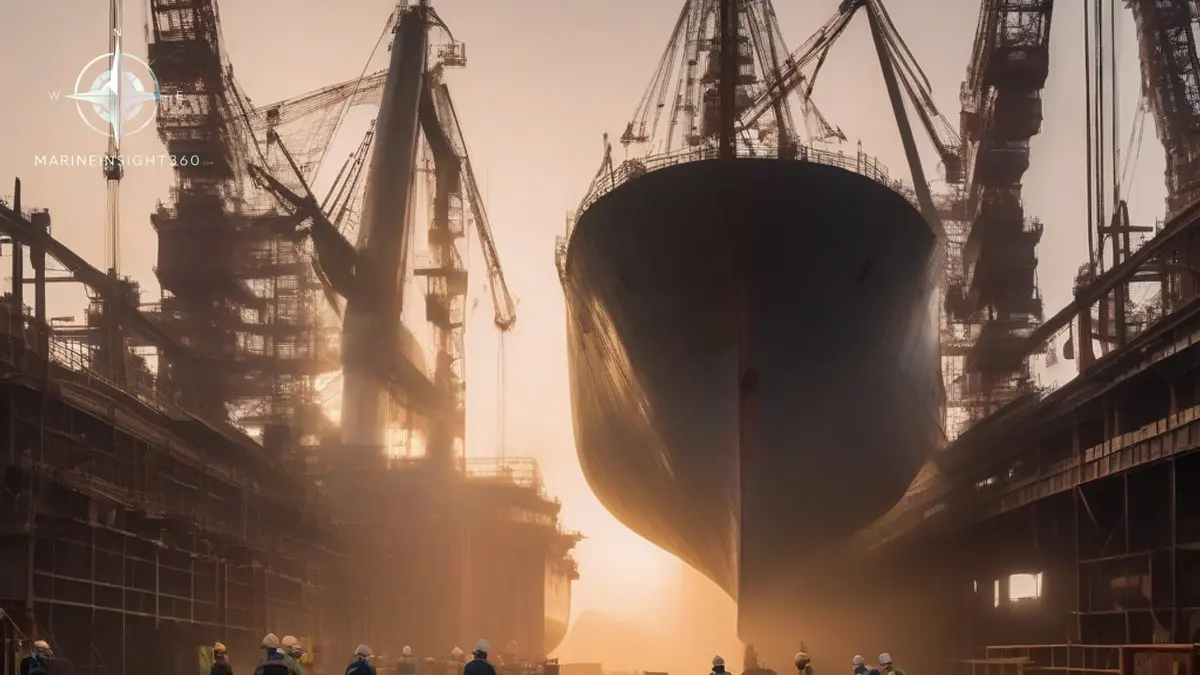
Understanding ship hulls starts with the hull itself: the watertight body of a ship that meets the water at the waterline — the primary structure that carries the decks, superstructure, and every piece of equipment on board. It encloses the cargo holds, machinery spaces, and crew areas, and it is the part of the vessel that interacts directly with the sea.
In plain terms, the hull is the ship's shell: the steel, wood, or composite skin that keeps water out and gives the vessel the shape that decides how it moves through the water.
Core structural elements that make a hull seaworthy
A modern steel ship is built around a framework of watertight decks, bulkheads, girders, stringers, and frames. Each element has a specific job:
- Keel — the backbone running along the bottom, providing longitudinal strength.
- Frames (or ribs) — transverse members that give the hull its shape and resist hydrostatic pressure.
- Bulkheads — vertical partitions that create watertight compartments, limiting flooding if the hull is breached.
- Girders and stringers — longitudinal reinforcements that tie the frames together and support deck loads.
- Decks — horizontal platforms that also act as watertight barriers when properly sealed.
Materials and construction methods
Choosing a hull material balances durability, weight, cost, and regulatory compliance:
- Steel — the dominant material for ocean-going ships, valued for its strength, weldability, and proven performance under impact. It needs regular corrosion control to meet SOLAS safety standards.
- Wood — still used for small craft and traditional vessels. It is light and easy to repair, but demands constant maintenance to prevent rot and marine-borer damage.
- Composites (fibreglass, carbon fibre, advanced polymers) — offer weight savings and excellent corrosion resistance, with growing use on high-speed ferries and offshore support vessels where lower displacement means fuel savings.
- Monocoque construction — an approach where the outer skin bears most of the loads, common in composite hulls and some aluminium vessels. It reduces internal framing but requires precise manufacturing control.
Hull shapes and how they affect performance
A hull's geometry determines its resistance, stability, and speed potential. Designers group shapes as either chined (hard-chined, flat-bottom, V-bottom) or smooth-curved (round-bilged, semi-round, S-bottom), and each family suits a different operating profile:
- Displacement hulls — stay fully submerged at all speeds, ideal for cargo carriers and tankers that prioritise cargo volume over speed.
- Planing hulls — lift partly out of the water at speed, reducing wetted surface area. Used on fast ferries and patrol boats, they reach higher speeds but need powerful engines and careful weight distribution.
- Semi-displacement hulls — blend the two, offering moderate speed with better fuel efficiency than a pure planing design.
Key hull metrics that designers and regulators monitor
Naval architects use several coefficients to describe how efficiently a hull uses its volume and waterplane area:
- Block coefficient (Cb) — the ratio of the underwater volume to a rectangular block of the same length, breadth, and draft.
- Midship coefficient (Cm) — the fullness of the mid-section, which influences stability and cargo space.
- Prismatic coefficient (Cp) — relates the underwater volume to the waterline area and length, helping to predict resistance across speeds.
- Waterplane coefficient (Cw) — compares the waterplane area to length times breadth, affecting wave-making resistance and roll behaviour.
Decision criteria for selecting a hull type
When planning a new vessel, owners and naval architects weigh several factors together:
- Operational profile — long-haul bulk carriers benefit from high-Cb displacement hulls, while high-speed passenger services need planing or semi-displacement forms.
- Fuel-efficiency targets — smoother hulls with a lower Cp and a bulbous bow reduce resistance and directly lower bunker consumption.
- Port infrastructure — draft limits may rule out deep V-bottoms or high-block designs.
- Regulatory compliance — SOLAS and tightening IMO emissions rules influence both material choice and hull form.
- Construction cost and schedule — steel remains the most cost-predictable material; composites can raise the upfront cost but may lower lifecycle maintenance.
Environmental impact of hull design
Hull resistance translates directly into fuel burn and emissions. A hull optimised for low resistance — a favourable prismatic coefficient, a bulbous bow where appropriate, and corrosion-resistant materials — can cut CO₂ output by several percent, helping operators meet the IMO's carbon-intensity targets.
Next steps
Hull form and construction sit behind almost every other decision on a ship, from stability to fuel bills. For related design and equipment explainers, continue with the Marine Insight 360 knowledge base, and confirm the latest SOLAS and IMO requirements with your flag state before any construction begins.
Recommended Reading

Maritime Engineer Role Overview
Discover the core duties, education, salary and job outlook for maritime engineers, plus specialisations and certification tips for seafarers and cadets.
Understanding Flotsam
Clear definition of flotsam, legal ownership rules, differences from jetsam, lagan and derelict, plus real‑world MSC Zoe example and crew guidance.
Saudi Arabia’s RSGT Considers Bid for Port of Cape Town
Learn rsgt considers bid with practical maritime context, safety checks, operational guidance and related resources for global shipping readers.